Services & Facilities
- Free health checks for puppies and kittens
- Puppy Parties
- Weight Clinics
- Pet Travel Scheme
- Disease consideration of pet travel
- Identity Microchips
- 2 fully equipped operating theatres
- Sevoflurane anaesthetics
- Pulse oximeter
- Sonic dental machine
- X-ray facilities
- Endoscope
- ECG
- Cryosurgery
- Laboratory facilities
- Ultrasound scanning
- Hospitalisation facilities
- Stables and paddocks
- Equine dentistry
- Equine Artificial Insemination
Free health checks for puppies and kittens

This is a complimentary service we off to our clients. When you acquire a new puppy or kitten it is important that they are health checked so that any potential problems can be detected early.
Also we can offer you advice on vaccinations, worming, flea control, neutering, diet and exercise.
Puppy parties
When your puppy has completed his/her vaccination course they will be invited to attend a puppy party at the surgery. This is run by the nurses and provides an excellent opportunity for your puppy to meet and socialise with other people and other puppies.
This socialisation time is an important part of puppy development and their future behaviour. In addition the nurses will be pleased to answer any question you may have about feeding, exercising, parasite control, neutering, identity microchipping. These parties have become very successful and are found to be very useful to our clients.
Weight Clinics
Obesity is becoming more common in dogs and in cats. As in people obesity causes many health problems such as joint disease, heart disease, diabetes and it does reduce the quality and length of life of your pet.
Our nurses are on hand to give expert advice on how to best feed and exercise your dog or cat. We are able to use prescription weight reduction diets and this helps to achieve a successful and controlled weight reduction plan that is simple to stick to and that works well. Our nurses will recommend a diet to feed your pet and will ask you to bring your pet in on a regular basis for weight checks and to ensure the weight is reducing as planned.
This programme is very successful and it has significantly improved the quality of life of the dogs and cats that have been involved. The comment from all owners is always that they wish they had done this sooner as their dog is full of energy and life and is fitter than he/she has ever been.
Hydrotherapy is extremely useful as part of a weight reduction programme. It is especially useful in older overweight dogs with arthritis. It is often difficult to achieve good weight loss in these dogs due to restrictions in the amount of exercise they can take. Hydrotherapy allows them to exercise much more and weight loss is easily achieved.
Pet Travel Schemes

The pet travel scheme allows you to take your dog or cat abroad and to return to the UK without the need for quarantine.
Your pet needs a valid pet passport in order to travel. The procedure to obtain this is as follows
1. Microchip your pet
2. Vaccinate against rabies
3. Have a blood test to check the rabies vaccination has been successful and that blood antibody levels are high enough
4. A pet passport can then be issued. Your pet is then able to re-enter the UK 6 calendar months after the date of the blood sampling which led to a satisfactory test result.
5. The passport is valid until the date of the next rabies booster injection. If the rabies booster vaccination is late you pet has to be blood sampled again and the passport reissued 6 calendar months following that date.
6. Your pet needs to be given treatment for ticks and tapeworm 24-48 hours before re-entry into the UK
7. Your pet must travel with an approved transport company on an authorised route.
8. Contact Defra for the countries involved in the pet travel scheme.
Disease Cosideration Of Pet Travel
In taking your dog or cat abroad there is a risk of them being exposed to certain diseases that they are not exposed to in the UK. They have no natural immunity to these diseases. There are 4 main diseases all of which are transmitted to your animal by insects.
Heartworm
This condition is transmitted by mosquitoes so high risk areas are near rivers, lakes and estuarine environments. It affects dogs and cats. The animal is infected by a bite from an infected mosquito, the bite delivers a larva which travels to the heart. The larva develops into an adult worm and these worms can be up to 30cm long. The presence of the worm in the heart leads to loss of exercise tolerance, fainting, weight loss, coughing, difficulty breathing, coughing up blood, heart failure. Treatment of heart worm has variable success depending on the severity of the clinical symptoms. Prevention of heart worm infection is very simple and effective. It is recommended that prescription antiparasitic products be given monthly and should be given before travelling and the treatment continued for the entire time they are abroad. Ask the vets for advice on which product is best.
Babesiosis
This a protozoan that is transmitted by ticks biting. It affects dogs and cats. The protozoan enter and multiply in the red blood cells of the animal and therefore cause anaemia. Signs include weight loss, inappetence, vomiting, lethargy, anaemia, jaundice. Treatment is available but is rarely fully curative. Prevention is to prevent ticks biting your pet either by avoiding tick areas and using veterinary prescribed insecticide products.
Leishmaniasis
This disease is transmitted to animals by the bite of sand flies. It affects dogs and is rarely seen in cats Leishmania is a protozoan that develops inside white blood cells in the animal. This causes an overproduction of immune complexes and these damage various organs of the body depending on where they go eg kidneys, skin, joints. Clinical signs include weight loss, lameness that shifts to different limbs, increased drinking, skin disease, anaemia. The incubation period of this disease can be very long in fact up to 6 years so you may not see any signs of disease until a long time after travelling to endemic areas. Treatment success depends on the severity of disease that is present. It is a disease that requires a lot of expensive treatment over a long term. Treatment rarely cures leishmaniasis and infected dogs can relapse. Prevention is highly recommended. It is best to avoid areas of sand flies and to keep dogs inside at dawn and dusk which is when sand flies are most active. Prevention is best using veterinary prescribed insecticide collars and products.
Ehrliciosis
This disease affects dogs and cats. It is transmitted to them by tick bites. It produces signs of nose bleeds, small bruising lesions in the mouth, blood in urine, anaemia,, eye disease, bone marrow destruction. It can be a disease that is present along with the previously mentioned conditions. Treatment is quite successful with the use of certain antibiotics. Prevention is to control ticks using veterinary prescribed insecticides
Identity Microchips

All domestic species of animal can be microchipped. The microchip is the size of a grain of rice and is inserted under the skin. The microchip number and animal's details are registered with a central database and the information stays there for the life of the animal. If an animal is lost or stolen and their microchip is found it can therefore be reunited with the owner quickly.
2 Fully Equipped Operating Theatres

We have 2 operating theatres. One theatre is reserved for sterile procedures such as abdominal surgery and orthopaedic surgery and the other theatre is used for procedures such as dentistry.
Sevoflurane anaesthetics

We use sevoflurane as our standard anaesthetic on all cases. Sevoflurane is the latest anaesthetic to be brought into veterinary use. It is used in human hospitals and is often reserved for higher risk cases such as paediatric anaesthetics.
We use this in preference to other anaesthetics as we believe it to be the best for the animal. The animals wake up very quickly from anaesthesia so can go home and recover from surgery more quickly.
Pulse oximeter

This machine is used to monitor the animal whilst under anaesthesia. It tells us important information on heart rate and oxygen levels in the blood.
This piece of equipment is one of many that we use to monitor animals under anaesthetic to ensure the safest and smoothest anaesthetic we can achieve.
Sonic dental machine

This equipment is the same as the equipment used by human dentists. It has a sonic scaler, polisher, drill and flush. It is as important to care for your pet's teeth as it is to care for your own.
X-ray facilities

We have state of the art x-ray equipment that we use on companion animals such as dogs, cats, rabbits, tortoises, guinea pigs, birds the list goes on. We also use it for horse work. The x-ray machine is portable so although we do prefer to x-ray horses at the surgery we can take the machine to other locations if needed.
We have the facility to develop the x-rays within minutes and so to interpret them straight away.
Endoscopes

We have 3 endoscopes at the practice. One is a video endoscope that we use to look into the lungs, the stomach, the colon. This is a useful tool that has in the past retrieved many bizarre objects from dog's stomachs without having to do surgery.
Examples include tights and pieces of toys in the stomach and bones that have lodged half way down a dog‘s oesophagus. We have a very small flexible endocope that is used to enter smaller spaces such as the nasal passages and into cat lungs. This has retrieved numerous objects such as blades of grass from cat's noses. These endoscopes mean that the dogs and cats do not need surgery in some cases and that means a less invasive procedure and a faster recovery. We also use the endoscopes as a further diagnostic aid. For example we can take samples from the lung and airways or biopsies from the stomach or colon as part of our diagnostic plan and this can help treat conditions as specifically as possible. The third endoscope we use in horses to look into the main airways and into the nasal cavities.
ECG

This is an electrocardiogram and is used to measure electrical activity in the heart. Heart disease is common in dog and this equipment can be very useful.
Cryosurgery
This is a technique using liquid nitrogen. This technique freezes and therefore kills diseased tissue. This can be used to remove sarcoids from horses and it is also used in small animal surgery occasionally.
Laboratory facility
Our in house laboratory facilities includes biochemistry, haematology and electrolyte blood machines. The biochemistry machine measures the function of the internal organs such as the liver and kidneys, while the haematology machine look at red and white blood cells. We have a microscope that we use to examine cell and urine samples or to look for parasites from skin or feaces.
These facilities mean that we are able to give rapid same day test results.
State of the art ultrasound machine

This machine is the same as used in medical hospitals. It is used for imaging internal organs such as heart, liver, kidneys, uterus. It is a very useful non-invasive diagnostic aid.
It is also capable of colour flow dopler imaging which looks at blood flow in organs such as the heart. The use of ultrasound allows us to formulate a specific diagnosis and therefore to tailor an exact treatment.
We also have a sector scanner which we use in cattle for fertility work and in horses for breeding work and tendon scanning.
Hospitalisation facilities
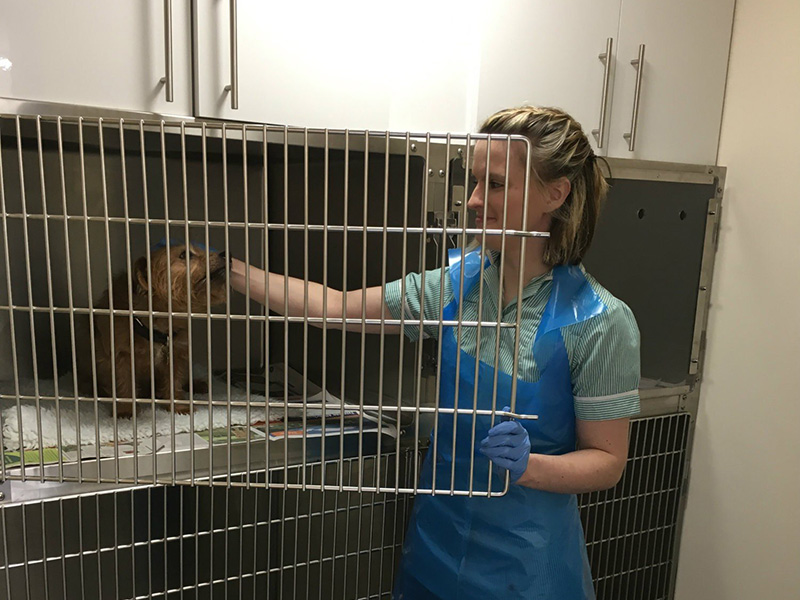
We have a superbly fitted hospitalisation facility which include a selection of different sized kennels. We have walk in kennels to house the very large dogs.

Stables and paddocks
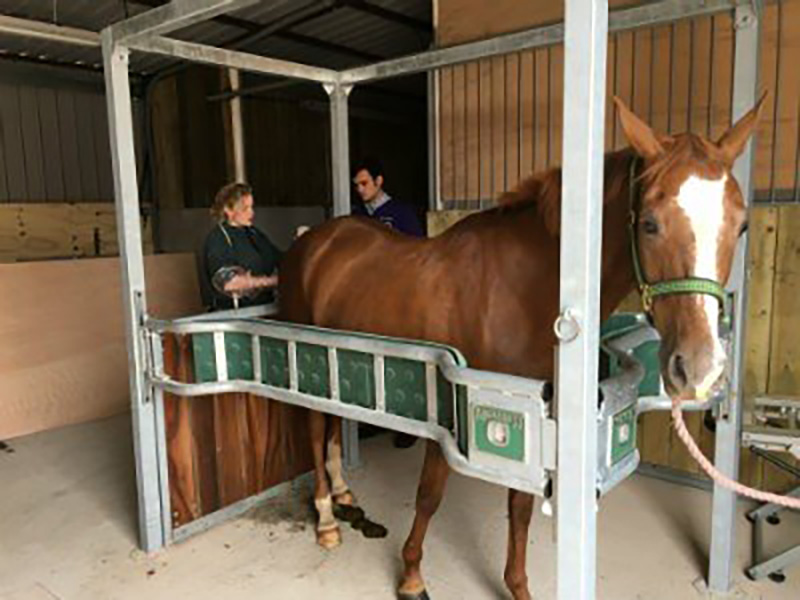
We have 2 stables and 2 paddocks. This allows us to hospitalise horses and to keep them at the surgery for diagnostic tests and treatment. We also have facilities for minor surgical procedures on horses such as castration, hernia repairs.

Equine dentistry

We are equipped to provide excellent dental care and treatment for horses. We use specially designed mouth gags to allow us to examine and treat the horses teeth properly. We sometimes use sedation in some horses if more involved procedures need to be done.
Equine Artificial Insemination
The practice is able to offer this service. Nigel Misselbrook can be contacted for further advice.